

I spent years reading books and articles and watching TV programs on the craft of dog training. I started each program filled with enthusiasm and willingness to learn. Eagerly, I filled my pockets with treats, attached the leash to my dog and applied the techniques I learned.

Each training session ended in disappointment for me and frustration for my dog. Can you relate to this problem?

Sure, I taught my dog to sit, to play dead and to come when called. The moment I stopped luring her with treats or when I really needed for her to follow those commands, the attempt was a huge fail.
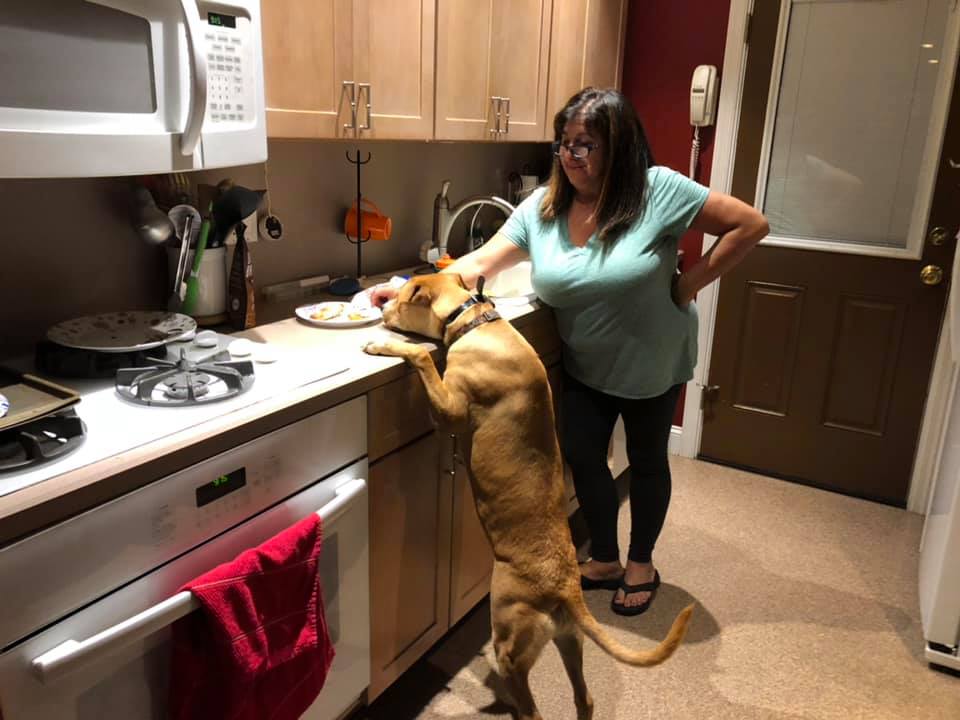
Despite the visions of dog-training perfection that swirled around in my fantasies, I did not come close to mastering that skill. Not until……
I enrolled in a school for dog training that I finally gained insight. You see, none of the articles, videos, books or TV programs provided the complete picture. How silly of me to believe a dog trainer would provide full disclosure on the internet — for FREE. If they provided all of their knowledge, dog owners would no longer need to hire them. The free content isn’t making them money, their income is derived from training dogs. The online information I poured over was marketing tactics to draw potential clients to their website, not education for dog-training wannabes. Duh!
The five-month online dog training educational program I took required me to study written material and to submit homework assignments that were graded by my mentor. Most importantly, the program required me to translate the written lesson into real-life training sessions with dogs. I did so using the four phases of learning, discovering the importance of marker training, reading my dog’s signals so I recognized stress during, and outside, of our training sessions. I even learned how to move past “being stuck” in my training and reaching success. The best part…

When I struggled with a command or behavior, no one took the leash from my hand to show me how to train the dog. Instead, my mentor coached me through the issue and pushed me to think outside the box until I resolved each dog behavior I encountered.
Training is so much more than teaching your dog to sit and give paw! I now understand how dogs think and how they learn. My knowledge of canine calming signals and body language removes the guesswork when communicating with dogs. My education helped me understand and recognize canine communication clearly. It separated the myths and inaccurate opinions of others from the facts of canine learning. Once we understand how to communicate with dogs and discover how they learn, we finally understand the craft of dog training.
Hands-on experience increases our skill. Education provides the knowledge. This is the one piece of information I wanted you to know before you dive into a career of dog training.
Learn more from ISCDT.com
Katie McKnight
 ISCDT - The Dog Trainer's School